The training is consistent. The diet is in order. So why are the results getting harder to hold on to?
Recovery takes longer than it used to. Muscle that came relatively easily at 28 now requires more work for less return. The gap between effort and outcome keeps widening, and nothing in the programme obviously explains it.
It’s rarely a training problem. The weights are right. The approach is sound.
What changes in the mid-thirties and beyond is the hormonal environment those efforts are taking place in. This is a biology question more than a training question, and the answer often starts with testosterone.
The Bidirectional Link Between Testosterone and Muscle
The relationship between testosterone and muscle runs in both directions, and understanding how that works helps explain why hormonal changes can have such a significant effect on training outcomes.
Testosterone plays a direct role in muscle development. It increases protein synthesis, the process by which muscle fibres repair and rebuild after training. It stimulates the release of growth hormone, which supports tissue repair more broadly. It also reduces the catabolic (tissue-breaking) effects of cortisol on muscle tissue, which matters particularly in the context of hard training or prolonged stress.
The other direction is worth understanding too. Excess body fat, particularly visceral fat (fat stored around the abdominal organs), drives aromatisation: the conversion of testosterone into oestrogen. This suppresses testosterone further. Lower testosterone makes building muscle harder, which makes it more difficult to improve body composition, which sustains the cycle.
Maintaining and building lean muscle helps interrupt that pattern by improving insulin sensitivity and reducing the rate of aromatisation. So the relationship is genuinely bidirectional. Testosterone supports muscle, and lean mass helps protect testosterone. Both sides of that equation matter.
How Low Testosterone Affects Your Training
When testosterone falls below an optimal level, the effects show up in specific, measurable ways. Many men attribute them to ageing, poor programming, or simply not trying hard enough. Often, the underlying variable is hormonal.
Here’s what suboptimal testosterone actually does, inside the gym and outside it:
- Reduced Protein Synthesis: Muscle fibres repair more slowly and less completely after training. The stimulus is there, but the response is blunted, which means the gap between effort and muscle gain keeps growing.
- Lower Red Blood Cell Production: Testosterone supports erythropoiesis (the production of red blood cells), which determines how efficiently oxygen reaches working muscles. When levels drop, so does sustainable output and stamina during sessions.
- Impaired Recovery: Soreness runs longer and deeper, and overtraining symptoms can appear at training loads that would previously have been manageable. The body’s ability to absorb and adapt to training diminishes, which pushes men to either overtrain or underperform.
- Reduced Drive and Motivation: Lower testosterone is associated with flat mood, reduced competitive drive, and less capacity to push during sessions. Consistency and intensity both suffer. The decline tends to be gradual enough that it can feel like a personality shift rather than a physiological one.
Building Muscle on Testosterone Therapy

Testosterone replacement therapy (TRT) restores testosterone to an optimal physiological range, not above it. The goal is to bring levels back to where the body should be functioning. TRT is not a shortcut, and it is not comparable to the supraphysiological doses used in performance enhancement. It’s a clinical intervention for men whose testosterone has fallen to a level that affects function, confirmed through proper assessment.
When paired with resistance training and adequate protein intake, men on appropriate testosterone replacement therapy in Singapore may notice improved recovery between sessions, better capacity to build and retain lean muscle, and more consistent energy. Body composition can shift positively over time when levels are stable and training is in place. These changes reflect the body responding to training the way it should when testosterone is no longer a limiting variable.
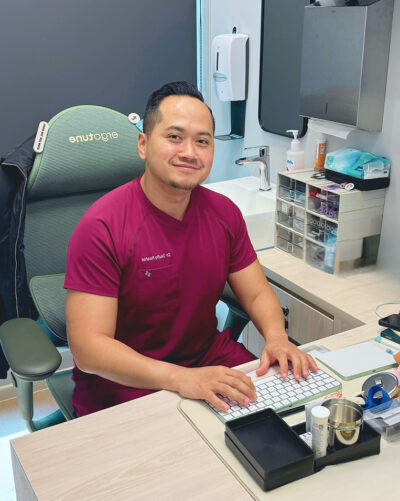
At TAF Clinic, blood work guides the starting point and levels are tracked at regular intervals throughout treatment. Dr Muhammad Taufiq Rashid stays involved at every stage, with the aim of maintaining optimal function within a healthy physiological range.
Getting the Right Assessment Before You Assume It’s Just Training
If you’ve been training consistently, eating well, and still not seeing the results you expect, the next step is not more discipline. It’s a proper look at what is going on hormonally.
That starts with the right blood work. A standard GP test often captures total testosterone only, which does not always reflect what the body is actually working with. Free testosterone and sex hormone-binding globulin (SHBG) can shift the picture considerably, and a single number rarely tells the full story.
At TAF Clinic, we assess testosterone as part of a broader men’s health picture. Low testosterone rarely affects just one area, and men who come in focused on training often find that energy, mood, and erectile function are all part of the same conversation. For men who are appropriate candidates, we offer TRT with ongoing monitoring and Dr Muhammad Taufiq Rashid involved throughout. ED treatment in Singapore is part of what we offer too, and where both are relevant, we address them within the same clinical assessment.
The starting point is knowing where your levels actually stand. Book a consultation and we’ll take it from there.