
Most prostate problems in men over 40 come down to one main cause: natural, age-related enlargement of the gland, known as benign prostatic hyperplasia (BPH). Infection is another possibility, and cancer, though less common, has its own separate risk factors. Knowing which is which is what turns a vague worry into a picture you can actually plan around.
What Is the Prostate, and Why Does It Change With Age?
The prostate is small, but it plays a real role in the body, and it changes in ways that are predictable enough to plan around. Understanding a bit of the biology takes the mystery out of most of what men notice from their forties onward, and makes prostate health feel less like a black box.
- What the Prostate Does: The prostate is a small gland located just below the bladder that produces part of the fluid in semen.
- Why It Enlarges With Age: Hormonal shifts over time cause the gland to gradually grow, a process nearly all men experience to some degree.
- When It Becomes Noticeable: Enlargement can start pressing on the urethra (the tube that carries urine out of the body), and that’s usually when symptoms like changes in urination appear.
What Causes Prostate Problems?
While the main cause of prostate problems in men over 40 cannot be pinned to a single condition, what can be said is that the phrase itself is a bit of an umbrella term. It covers a few distinct conditions, each with a different cause, rather than one single issue, and treatment depends on which one is actually in play. Getting the right diagnosis is where good prostate health care starts.
- Benign Prostatic Hyperplasia (BPH): This is the most common cause of prostate symptoms in men over 40. It is an age-related enlargement, not cancer, and it responds well to treatment when symptoms warrant it.
- Prostatitis: Referring to the inflammation or infection of the prostate, prostatitis can happen at any age, often causing discomfort or urinary changes, and typically responds well to appropriate medical treatment.
- Prostate Cancer: Less common than BPH, prostate cancer carries its own set of risk factors, including age and family history. This is why screening exists as a distinct conversation from general prostate health, and why we treat it that way in consultation.
Signs Worth Getting Checked
Most of the signs that bring men in are not dramatic. They tend to creep up quietly, which is why they often get put off. But none of them is a reason to panic. They are just a reason to have a proper look, because prostate health is much easier to manage when we know what’s going on.
- Urinary Changes: Needing to urinate more often, especially at night, or noticing a weaker stream than usual.
- Difficulty Emptying Fully: A sense of not fully emptying the bladder, or having to strain to get things started.
- When a Change is Persistent: Any change that persists is worth a conversation with a doctor. Not because it’s necessarily serious, but because it’s straightforward to assess.
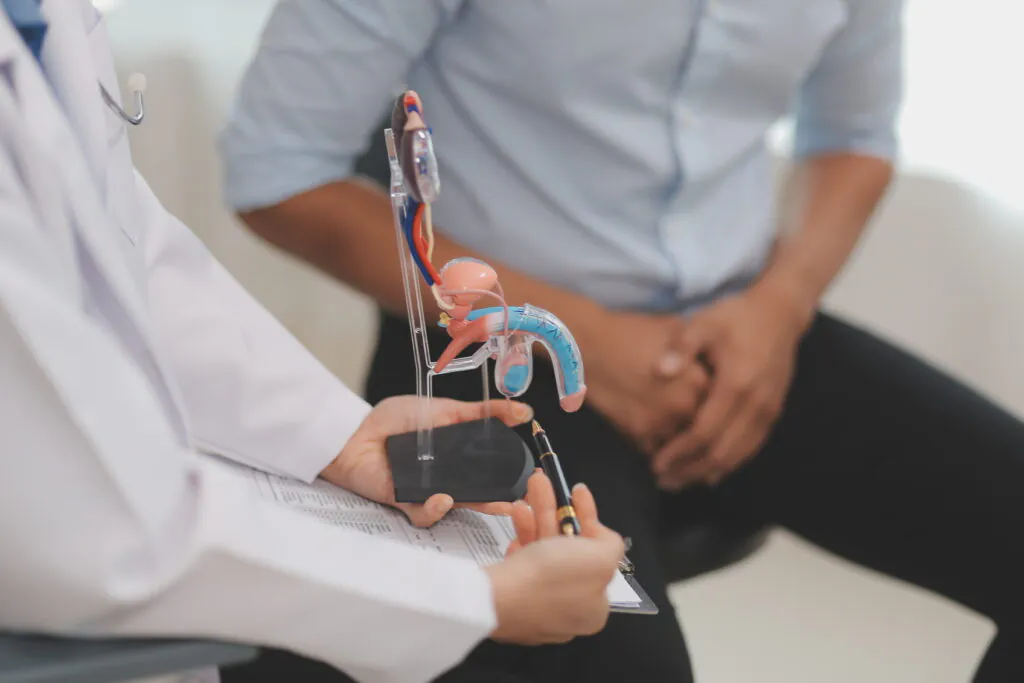
How to Improve Prostate Health Naturally
If you’re wondering how you can improve prostate health naturally, lifestyle habits alongside regular checks can help.
- Diet and Nutrition: A diet rich in vegetables, whole foods and healthy fats, and lower in heavily processed red meat, is generally associated with better prostate health outcomes.
- Staying Active: Regular physical activity supports healthy hormone balance, weight management and urinary function, all of which matter for how the prostate ages.
- Routine Screening: Natural habits help, but they work alongside, not in place of, regular prostate checks as men move further into their forties, fifties and sixties.
Screening and When to Talk to a Doctor
Screening tends to sound bigger than it is. In practice, it’s a conversation and, in most cases, a simple test. It’s a personal decision made with a doctor rather than a one-size-fits-all rule, because your age, family history and current symptoms all shape whether screening makes sense for you and how often.
- What Screening Involves: Typically a simple blood test called a PSA (prostate-specific antigen) test, and where appropriate, a physical examination.
- Who Should Consider It: Often discussed from around age 50 onward, or earlier for men with a family history of prostate cancer. What’s right for you is best decided in conversation with a doctor.
- A Conversation, Not a Verdict: Screening is about staying informed. It’s not something to put off out of worry over what it might find, because knowing gives you options.
Take Charge of Your Prostate Health With TAF Clinic
Prostate changes are a normal, manageable part of getting older, and staying informed is one of the most empowering things a man can do for his health. At TAF Clinic, Dr Muhammad Taufiq Rashid and the team look after prostate concerns in the same way we handle the rest of men’s health: clear information, a real answer, and a plan you can actually work with. That covers BPH assessment and management, prostate cancer screening where appropriate, and the honest conversation that goes with both.
As a men’s health practice, prostate care sits alongside the other reasons men in their forties and fifties come to see us. We also handle ED treatment in Singapore, and serve as a TRT doctor Singapore patients rely on for hormone reviews and a straight, evidence-based answer on what to do next.
A prostate check-up is straightforward, and nothing to put off out of discomfort. So if you’ve noticed changes, or you’re simply at the age where a baseline conversation makes sense, book a consultation with us to talk through your symptoms, screening options and what we’d recommend for you.