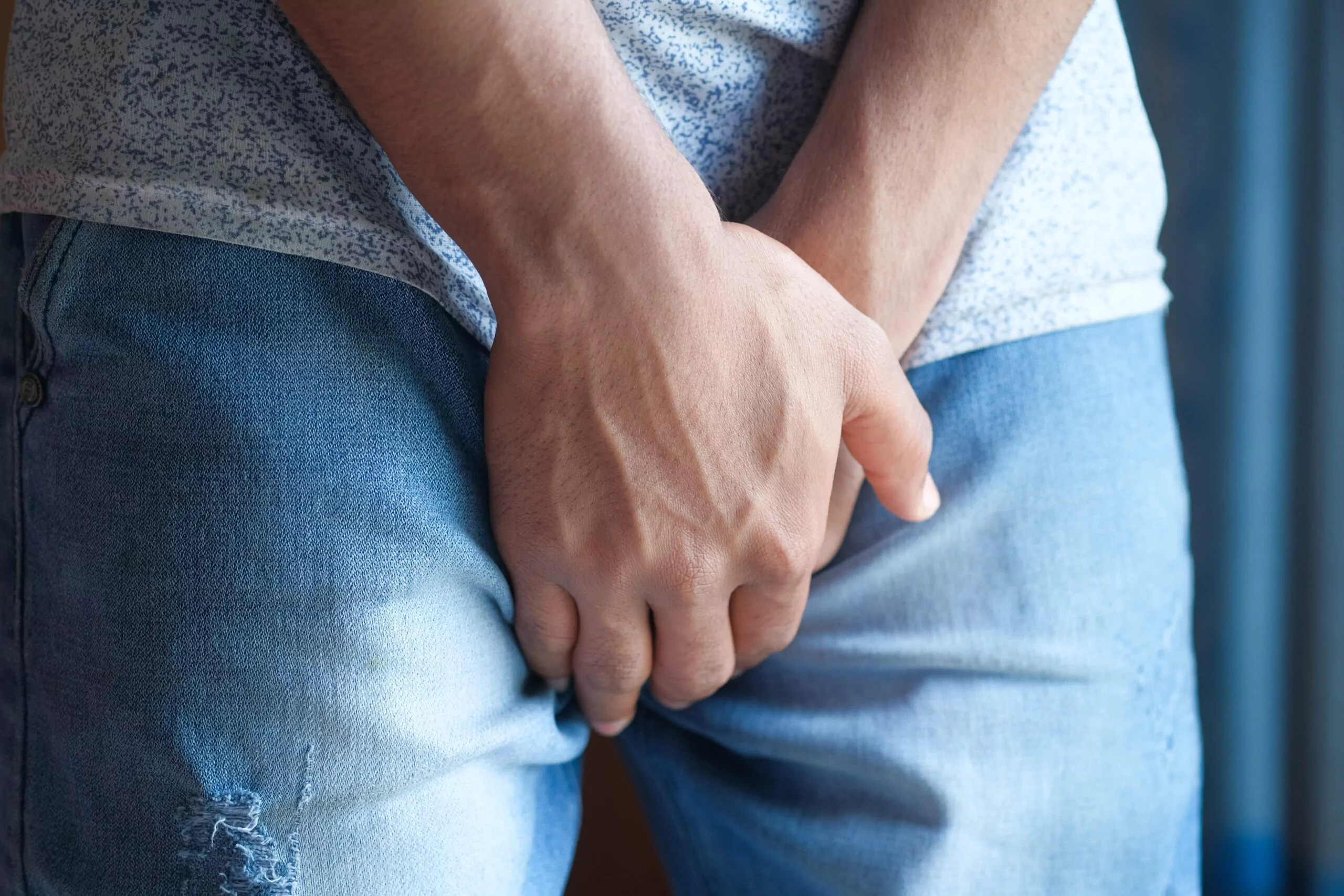
Genital Warts Treatment In Singapore

Genital warts are small growths that appear on the skin and mucous membranes of the genital and anal areas. They develop due to certain strains of the human papillomavirus (HPV), which spreads through direct skin-to-skin contact during sexual activity. These warts may appear as flat lesions, small cauliflower-shaped bumps, or tiny stem-like protrusions, and while often painless, they can cause discomfort, itching, and psychological distress for those affected.

Symptoms of Genital Warts In Singapore

Genital warts manifest through various physical signs that differ between individuals, with some men experiencing no noticeable symptoms despite carrying the virus.

  • Visible Growths

    Small, flesh-coloured or grey swellings appear in the genital area, sometimes clustered together in a cauliflower shape. These growths may be flat or raised and vary in size from barely visible to several millimetres in diameter.

  • Location-Specific Appearance

    In men, warts typically appear on the penis (particularly under the foreskin and on the shaft), the scrotum, around the anus, and occasionally inside the urethra.

  • Discomfort and Irritation

    Some men experience itching, burning, or tenderness in areas where warts are present. This discomfort may increase during sexual intercourse or when clothing rubs against affected areas.

  • Bleeding

    Genital warts may bleed after sexual intercourse or vigorous washing due to their fragile surface tissue. This bleeding occurs from minor trauma to the wart tissue rather than from the condition itself.
Causes and Risk Factors

Genital warts develop through specific transmission methods and various factors that increase susceptibility to HPV infection.

HPV Infection

Types 6 and 11 of the human papillomavirus cause the majority of genital warts cases in men. These strains differ from the high-risk HPV types associated with penile and anal cancers.

Sexual Transmission

Direct skin-to-skin contact during vaginal, anal, or oral sexual activity transmits the virus. The virus can spread even when no visible warts are present on an infected partner.

Multiple Sexual Partners

Having numerous sexual partners increases exposure to HPV. Each new partner presents an additional risk of encountering the virus strains that cause genital warts.

Compromised Immune System

Men with weakened immune systems due to HIV/AIDS, immunosuppressive medications, or other conditions face a greater risk of developing genital warts after HPV exposure. Their bodies have reduced ability to suppress viral replication.

Age

Young adult men have higher rates of genital warts. This demographic correlation relates to sexual behaviour patterns and lower rates of HPV vaccination in some populations.

Diagnostic Methods

  • Visual Examination: The genital area is carefully inspected under good lighting, and magnification may be used to improve visibility. In some cases, a mild acetic acid solution is applied to the skin, which can cause warts to turn white temporarily, making them easier to distinguish from the surrounding tissue.
  • HPV DNA Testing: This test identifies the specific type of human papillomavirus (HPV) present in a lesion. While not typically used for diagnosing common genital warts, it may be helpful in cases with atypical features or when standard treatments are not effective.

Treatment Options

Treatment approaches for genital warts in Singapore focus on removing visible lesions, relieving symptoms, and reducing transmission risk.

Patient-Applied Topical Treatments

These medications allow men to treat their warts at home following medical guidance. Podophyllotoxin solution or cream destroys wart tissue when applied in cycles, while imiquimod cream stimulates the immune system to fight the virus. These treatments require careful application and typically require multiple weeks of consistent use.

Professionally-Applied Topical Treatments

Stronger solutions are applied directly to warts during medical appointments. Trichloroacetic acid (TCA) chemically burns wart tissue, while podophyllin resin disrupts cell division in the wart. These treatments often require several applications spaced weeks apart and work best for smaller, localised wart clusters.

Cryotherapy

This procedure involves freezing warts with liquid nitrogen, causing cell death and subsequent removal of the lesion. The freezing agent is applied precisely to the wart tissue using a spray device or cotton swab. The procedure causes temporary discomfort followed by blister formation, with the treated tissue eventually falling off.

Surgical Excision

For larger warts or those resistant to other treatments, surgical removal provides immediate clearance. After administering local anaesthetic, the wart tissue is cut out and the wound may be closed with stitches. This approach offers the advantage of removing the entire wart in one procedure and providing tissue for pathological examination if needed.

Laser Therapy

This technique uses focused light energy to vaporise wart tissue with minimal damage to surrounding skin. The precision of laser treatment makes it suitable for warts in sensitive locations or extensive cases where other methods prove impractical. The procedure requires local or general anaesthetic depending on the extent of treatment, and healing typically takes 2-4 weeks with proper wound care.

Are your symptoms affecting your quality of life?

Consult our MOH-accredited specialist for a personalised treatment plan today.

Prevention and Management

HPV vaccination offers protection against common strains causing genital warts when administered before exposure to the virus. Using barrier methods like condoms during sexual activity reduces transmission risk, though they do not provide complete protection. Regular sexual health check-ups help detect and treat infections early. After diagnosis, avoiding sexual contact until warts resolve completely is advised. Some men experience recurrences despite treatment, necessitating regular monitoring for new growths.

Dr Muhammad Taufiq Rashid

MBBS (NUS)

Member of SASO

Member of SMHS

Member Of ISSM

With over 15 years of experience in clinical practice and healthcare management, Dr Muhammad Taufiq Rashid focuses on men’s health and weight management. He is also a member of the International Society for Sexual Medicine (ISSM), reflecting his continued commitment to men’s wellness.

His care approach incorporates evidence-based medical procedures and tailored solutions designed to meet individual needs.

Dr Taufiq’s professional background spans a range of medical disciplines, equipping him with the knowledge and skills to guide patients in achieving their health goals. He is certified in circumcision techniques using the Shang Ring and ZSR Stapler methods, offering efficient and minimally invasive procedures completed in less than 15 minutes.

Education, Experience & Affiliations

Dr. Taufiq began his medical career as a Medical Officer under MOHH from 2006 to 2014, gaining valuable experience in multidisciplinary healthcare at Alexandra Hospital, KK Hospital, Bright Vision Hospital, and AMK THK Hospital.

From July 2017 to March 2021, he served as Chief Resident Physician at DTAP Clinic Somerset Branch, focusing on men’s health and providing holistic, patient-centered care.

As Medical Director at Pulse Medical Centre from April 2021 to December 2024, Dr. Taufiq led multidisciplinary care and advanced patient-first practices.

He holds certifications in ShangRing Circumcision, ZSR Stapler Circumcision, SCOPE certification, and ShangRing Training (Wuhu, Snnda, 2018). He is also a Certified Trainer for ShangRing Circumcision, ZSR Stapler Circumcision, Touchstone Circumcision, and the Storz T-Top Duolith Shockwave Therapy Machine.

In 2024, he completed the Androcourse under the Society of Men’s Health Singapore. Dr. Taufiq is a member of the Society of Men’s Health Singapore (SMHS), the Singapore Association for the Study of Obesity (SASO), and the International Society of Sexual Medicine (ISSM), reflecting his ongoing commitment to men’s health and weight management.

Make an Enquiry

Got Questions? Please fill in the enquiry form below and we look forward to addressing your question.

    Our Location

    SBF CENTER MEDICAL SUITES
    160 Robinson Rd, #05-05, Singapore 068914

    Mon – Thu: 9:00am to 2:00pm, 3:00pm to 6:00pm
    Fri: 9:00am to 12:30pm, 2:00pm to 6:00pm
    Sat: 9:00am to 1:00pm
    Sun & PH: Closed

    Frequently Asked Questions

    Can genital warts resolve without treatment?

    In some cases, genital warts may clear on their own as the immune system gradually eliminates the virus. However, treatment is generally recommended to ease symptoms, lower the risk of transmission, and address any emotional or psychological discomfort associated with the condition.

    How long should one wait after treatment before resuming sexual activity?

    It is best to wait until the treated area has fully healed and no visible warts remain. The healing period depends on the type of treatment used and typically ranges from 1 to 4 weeks. Even after healing, using barrier protection can help reduce the risk of transmission, as the virus may still be present in the surrounding skin.

    Will a partner develop genital warts after sexual contact?

    Not everyone exposed to HPV will develop genital warts. The likelihood of transmission depends on several factors, including viral load, individual immune response, and the presence of microscopic skin abrasions. While some individuals may remain symptom-free, subclinical infections are possible.