



Fraud Blocker

Testosterone Replacement Therapy (TRT) In Singapore

You wake up tired even after a full night’s sleep. Your drive at work and in the bedroom is not what it used to be. You feel flat, foggy, or unusually short-tempered, and you cannot quite explain why. For many men, these changes are not simply the price of getting older. They can be signs of low testosterone.

Testosterone is a hormone in men that impacts energy levels, mood, muscle mass, and sexual health. As men age, testosterone levels naturally decline, often leading to physical and emotional changes. A Testosterone replacement therapy (TRT) is a treatment that supplements or restores testosterone levels in men experiencing symptoms associated with low testosterone.

Medically reviewed by Dr Muhammad Taufiq Rashid

Common Symptoms of Low Testosterone/Testosterone Deficiency

Low testosterone, or “Low T”, can produce a variety of physical, mental, and emotional symptoms, including:

  • Persistent Fatigue and Low Energy: Many men with Low T feel constantly tired and struggle to maintain energy levels, even after adequate rest or sleep.
  • Reduced Libido and Sexual Function: Low testosterone often results in a noticeable decrease in interest in sexual activity, and in some cases, it may contribute to issues with sexual performance or erectile function.
  • Mood and Cognitive Changes: Men with Low T may experience increased irritability, anxiety, or feelings of depression. Low testosterone can also impact mental clarity, making it harder to focus or remember details.
  • Loss of Muscle Mass and Increased Body Fat: Testosterone helps to maintain muscle mass and body composition. Low levels may lead to a reduction in muscle tone and strength, alongside an increase in body fat, especially around the abdomen.
  • Decreased Bone Density: Reduced testosterone can weaken bones over time, raising the risk of fractures.
  • Hair Loss and Changes in Hair Growth: Some men notice thinning hair or reduced body and facial hair.
  • Erectile Dysfunction: Low testosterone can contribute to difficulty achieving or maintaining an erection.

These symptoms are often linked to age-related hormone changes but can also be influenced by lifestyle or medical conditions. A blood test is typically needed to confirm Low T levels and assess if testosterone treatment may be beneficial.

Causes of Testosterone Deficiency

Testosterone deficiency can develop for several reasons, from the natural effects of ageing to underlying medical conditions. Understanding the cause is an important part of effective therapy and treatment:

  • Ageing: Testosterone gradually declines after the age of 40 as part of the natural ageing process, though how much varies from man to man.
  • Primary Hypogonadism: When the testicles themselves cannot produce enough testosterone, often due to injury, infection, chemotherapy, radiation, or an inherited condition.
  • Secondary Hypogonadism: When the hypothalamus or pituitary gland fails to send the signals that trigger testosterone production, sometimes because of a pituitary tumour, certain medications, or systemic illness.
  • Chronic Health Conditions: Diabetes, obesity, kidney disease, liver disease, and HIV can all lower testosterone by disrupting how hormones are produced and processed.
  • Medications: Some drugs suppress testosterone, including androgen deprivation therapy for prostate cancer, blood pressure medicines such as spironolactone, and certain psychiatric medications. The effect often depends on the dose and may ease once the medication is stopped.
  • Lifestyle Factors: A poor diet, too little exercise, heavy drinking, and ongoing stress can all pull testosterone down by placing strain on the body’s hormonal balance.

How Low Testosterone Is Diagnosed

Confirming Low T takes more than a single test. It follows a careful sequence, each step building a clearer picture before any treatment is considered:

  • Medical History and Symptom Assessment: Your doctor discusses your symptoms, health history, and how they are affecting your daily life.
  • Morning Blood Test: Testosterone is highest in the morning, so blood is drawn early in the day to capture the most reliable reading.
  • What Is Measured: The test typically checks total testosterone, free testosterone, and the hormones LH and FSH, which help pinpoint the cause.
  • Confirming the Diagnosis: A diagnosis usually requires at least two separate low readings, not a single result, to rule out normal fluctuation.
  • Additional Tests: Where needed, further tests may be ordered to identify any underlying condition contributing to low testosterone.

At TAF Clinic, Dr Taufiq personally reviews all of your results before making any recommendation. Only when the full picture is clear will he advise whether TRT is the right step for you.

What Is Testosterone Replacement Therapy?

Testosterone replacement therapy (TRT) in Singapore is a treatment aimed at restoring testosterone levels in men when natural production declines, leading to noticeable physical or emotional symptoms. By supplementing testosterone, TRT seeks to rebalance hormone levels to better support functions like energy, muscle health, mood stability, and cognitive clarity. The therapy maintains testosterone within an optimal range, with adjustments based on individual needs and responses for effective symptom relief.

Benefits of TRT

TRT provides a number of benefits aimed at improving overall well-being, including:

  • Enhanced Energy and Mood

    As testosterone levels are restored, many men experience higher energy, reduced fatigue, and improved mood stability.

  • Increased Muscle Mass and Strength

    Testosterone supports muscle growth and strength, helping men improve tone, endurance, and physical performance.

  • Improved Sexual Function and Libido

    TRT can help restore libido and improve erectile function, benefiting sexual health and intimacy.

  • Better Cognitive Function

    Many men notice enhanced mental clarity and focus after starting TRT, which can support concentration and memory.
Who Can Benefit From TRT?

TRT may be suitable for men experiencing symptoms of low testosterone, especially when other approaches, like lifestyle changes, do not provide relief. Those who are most likely to benefit are:

Men with Clinically Low Testosterone

TRT is recommended for men whose blood tests confirm low testosterone levels, along with symptoms like low energy or reduced libido.

However, TRT may not be suitable for men with normal testosterone levels, or for those with untreated prostate or breast cancer, as therapy could carry more risk than benefit. A thorough assessment always comes first.

Men Seeking Symptom Relief

Those experiencing persistent fatigue, low mood, or muscle loss related to low testosterone may benefit from TRT, especially if these symptoms impact daily life.

That said, TRT may not be the answer if symptoms stem from another cause, such as poor sleep, thyroid issues, or depression. In these cases, treating the underlying condition may help more than testosterone therapy alone.

Patients Needing Professional Guidance and Monitoring

TRT is ideal for men who appreciate ongoing medical supervision to ensure hormone levels remain balanced and safe with adjustments made as necessary.

However, TRT may not be appropriate for men who are unable to commit to regular monitoring, since safe treatment depends on consistent follow-up and blood tests over time.

Different Forms of TRT Treatments

TRT is available in a variety of forms, allowing for a tailored approach based on each patient’s specific needs and preferences. The common forms include:

  • Topical Gels and Creams

    Applied daily to the skin, gels allow testosterone to enter the bloodstream gradually. Users must avoid skin-to-skin contact with others post-application to prevent transfer.

  • Injections

    Administered directly into the muscle, injections provide a controlled dose lasting 1-2 weeks, suitable for those preferring infrequent dosing.

  • Oral Testosterone

    Convenient as a daily pill, though it may pose a higher risk of liver side effects, making it less common for long-term use.

  • Skin Patches

    Worn on the skin for a steady 24-hour release of testosterone.

  • Pellet Implants

    Placed under the skin, pellets release testosterone gradually over several months, ideal for those seeking a low-maintenance option.

Currently, oral testosterone, skin patches, and pellet implants are not available in Singapore. Other forms of TRT would be recommended if you are seeking TRT in Singapore.

Testosterone Replacement Therapy Plans and Pricing at TAF Clinic

All packages are non-refundable. Prices stated below are after GST charge of 9%.

Consultation Fee

$80.65

Testosterone Injection Cost per Injection/Cycle

Nebido $479.60
Testosterone cypionate $250.70

Blood Test Fees and Other Evaluation Fees

$436

What to Expect at TAF: From First Consultation to Ongoing Care

From your very first visit, our TRT treatment is designed to be clear, personal, and supportive at every stage. Here is what the journey looks like:

01

Initial Consultation

You discuss your symptoms, health history, and goals with our TRT doctor in Singapore, in a relaxed and confidential setting.

02

Morning Blood Testing

An early-morning blood test is ordered to measure total and free testosterone, along with LH and FSH, for an accurate baseline.

03

Results Review and Treatment Decision

Your results are reviewed in full, and if treatment is appropriate, the options are explained clearly so you can decide together.

04

Treatment Begins

A suitable form of TRT is selected, a starting dose is set, and you are briefed on what to do and what to watch for.

05

Ongoing Monitoring

Your progress and hormone levels are tracked over time, with doses fine-tuned as needed. Many men notice improvements in energy and mood within three to six weeks, while gains in muscle mass, strength, and libido may take several months to fully develop.

Results build gradually, and every individual may progress on a slightly different timeline. That is why this process is personalised to you from start to finish, rather than following a one-size-fits-all plan.

Are your symptoms affecting your quality of life?

Consult our GP for a personalised treatment plan today.

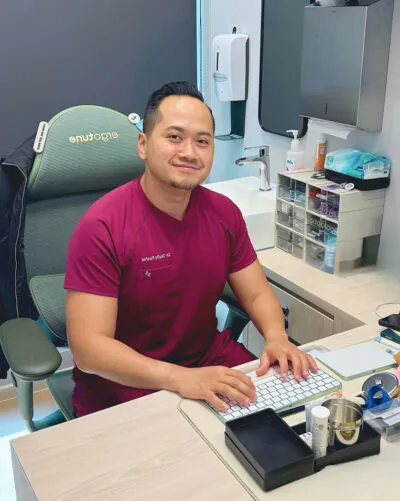
Dr Muhammad Taufiq Rashid

MBBS (NUS)

Member of SASO

Member of SMHS

Member Of ISSM

With over 15 years of experience in clinical practice and healthcare management, Dr Muhammad Taufiq Rashid focuses on men’s health and weight management. He is also a member of the International Society for Sexual Medicine (ISSM), reflecting his continued commitment to men’s wellness.

His care approach incorporates evidence-based medical procedures and tailored solutions designed to meet individual needs.

Dr Taufiq’s professional background spans a range of medical disciplines, equipping him with the knowledge and skills to guide patients in achieving their health goals. He is certified in circumcision techniques using the Shang Ring and ZSR Stapler methods, offering efficient and minimally invasive procedures completed in less than 15 minutes.

Education, Experience & Affiliations

Dr. Taufiq began his medical career as a Medical Officer under MOHH from 2006 to 2014, gaining valuable experience in multidisciplinary healthcare at Alexandra Hospital, KK Hospital, Bright Vision Hospital, and AMK THK Hospital.

From July 2017 to March 2021, he served as Chief Resident Physician at DTAP Clinic Somerset Branch, focusing on men’s health and providing holistic, patient-centered care.

As Medical Director at Pulse Medical Centre from April 2021 to December 2024, Dr. Taufiq led multidisciplinary care and advanced patient-first practices.

He holds certifications in ShangRing Circumcision, ZSR Stapler Circumcision, SCOPE certification, and ShangRing Training (Wuhu, Snnda, 2018). He is also a Certified Trainer for ShangRing Circumcision, ZSR Stapler Circumcision, Touchstone Circumcision, and the Storz T-Top Duolith Shockwave Therapy Machine.

In 2024, he completed the Androcourse under the Society of Men’s Health Singapore. Dr. Taufiq is a member of the Society of Men’s Health Singapore (SMHS), the Singapore Association for the Study of Obesity (SASO), and the International Society of Sexual Medicine (ISSM), reflecting his ongoing commitment to men’s health and weight management.

Make an Enquiry

Got Questions? Please fill in the enquiry form below and we look forward to addressing your question.

    Our Location

    SBF CENTER MEDICAL SUITES
    160 Robinson Rd, #05-05, Singapore 068914

    Mon – Thu: 9:00am to 2:00pm, 3:00pm to 6:00pm
    Fri: 9:00am to 12:30pm, 2:00pm to 6:00pm
    Sat: 9:00am to 1:00pm
    Sun & PH: Closed

    Frequently Asked Questions

    Are there side effects of TRT?

    TRT is generally safe under medical supervision, though some men may experience mild side effects like acne or hair loss. Other side effects include reduced sperm production, worsening sleep apnoea and gynaecomastia (enlarged breast tissue). Regular monitoring helps manage any potential side effects effectively.

    How long will I need to be on TRT?

    TRT can be long-term therapy, depending on individual needs. Some men may require ongoing treatment to maintain hormone balance, while others may transition off therapy if symptoms improve. A healthcare provider can help determine the appropriate duration of treatment.

    What are the signs that TRT may not be suitable for me?

    If you experience significant side effects, such as severe acne, mood swings, or signs of fluid retention, TRT may need to be adjusted or reconsidered. Regular medical supervision helps identify whether TRT is the best option or if alternative treatments may be more suitable.

    What are alternatives to TRT?

    If testosterone replacement therapy is not right for you, several alternatives exist. Lifestyle changes such as improved diet, regular exercise, better sleep, and weight loss (including medical weight loss injections like Mounjaro and Tirzepatide) can lift testosterone naturally. Medications like clomiphene or Human chorionic gonadotropin (hCG) may stimulate your body’s own production, while treating underlying conditions may also restore hormone balance.

    Does TRT affect fertility and/or sperm?

    Yes. Testosterone replacement therapy can lower sperm production by reducing the natural signals that stimulate the testicles, which may affect fertility. Men who wish to preserve fertility should discuss this before starting, as alternatives such as clomiphene or hCG may be more suitable options to consider.

    Is TRT covered by insurance in Singapore?

    Coverage varies. In Singapore, testosterone replacement therapy for testosterone deficiency is often treated as care for a chronic condition, and many insurance plans and MediSave do not cover it. Because policies differ, we recommend checking directly with your insurer. The team at TAF Clinic can also explain our pricing clearly, so you know exactly what to expect.

    Is TRT legal in Singapore?

    Yes. Testosterone is a prescription medication, and TRT is entirely legal in Singapore when prescribed and supervised by a licensed doctor or specialist. It should never be sourced or self-administered without medical guidance, as this carries real health risks and no proper monitoring. Working with a doctor focusing on men’s health ensures your treatment stays safe, legal, and correctly managed.

    © 2026 T.A.F. HEALTHCARE PTE. LTD.

    Co. Reg. No: 202439400D